.png)
In the traditional recovery landscape, we have spent decades focusing almost exclusively on "top down" or "mind first" processing. This approach is built on the belief that if we can just master our thoughts, deconstruct our past in talk therapy, and strengthen our willpower, our physical bodies will eventually fall into line. However, for many navigating the long road of healing from trauma or addiction, a frustrating and often shameful gap remains. You can understand your history perfectly and still wake up with a heart that refuses to stop racing. You can have years of sobriety and still feel a crushing sense of "impending doom" that no amount of positive thinking can quiet.
This persistent disconnect exists because trauma is not merely a story we tell about the past, it is a physiological state maintained by the autonomic nervous system. When we experience an overwhelming event, the brain’s survival architecture, specifically the amygdala, takes an "imprint" of the experience. This imprint isn't just a mental memory, it is a muscular, chemical, and neural configuration that lives deep within the tissues. To truly recover, we must stop trying to logic our way out of a biological survival response. We must learn to speak the language of the body, which communicates not in words, but in raw, visceral sensations.
To understand why willpower fails in the face of a trigger, we have to look at the hierarchy of the human brain. When the amygdala detects a threat whether it is a loud noise, a specific tone of voice, or an internal craving, it initiates what neuroscientists call a "somatic hijack." This is an evolutionary survival mechanism designed to bypass slow, logical thought in favour of instant action. In a split second, the amygdala signals the adrenal glands to flood the system with cortisol and adrenaline.
Simultaneously, the brain effectively cuts the power to the prefrontal cortex, which is the "thinking brain" responsible for impulse control, complex reasoning, and rational perspective. This is a biological reality, the part of your brain that knows your coping skills is temporarily taken offline to save your life. For the person in recovery, this manifests as "physical guarding," a state where the muscles remain perpetually braced for a blow that never comes. The nervous system remains stuck in a loop of survival long after the environment has become safe, making the simple act of "relaxing" feel like a physical impossibility.
The bridge between our internal experience and the external world is the autonomic nervous system, primarily governed by the vagus nerve. Modern somatic science teaches us that our nervous system exists on a "ladder" of states that dictate how we perceive reality. At the top of the ladder is the ventral vagal state, which is the state of social engagement, safety, and connection. This is the only state in which true emotional healing and neuroplasticity can occur.
When we feel a threat, we move down the ladder into the sympathetic state, the realm of anxiety and mobilisation. Here, our breath becomes shallow and we become hyperfocused on scanning for danger. In recovery, this often feels like chronic restlessness or the "itch" that leads to a craving. At the very bottom is the dorsal vagal state, the state of "freeze" or shutdown. This manifests as numbness, depression, and dissociation. Many people misinterpret this state as laziness or a lack of motivation, when it is actually a traumatised nervous system trying to protect itself by disappearing. Recovery is not the act of staying at the top of the ladder at all times, but rather the development of "vagal tone," which is the biological flexibility to climb back up after life inevitably knocks you down.

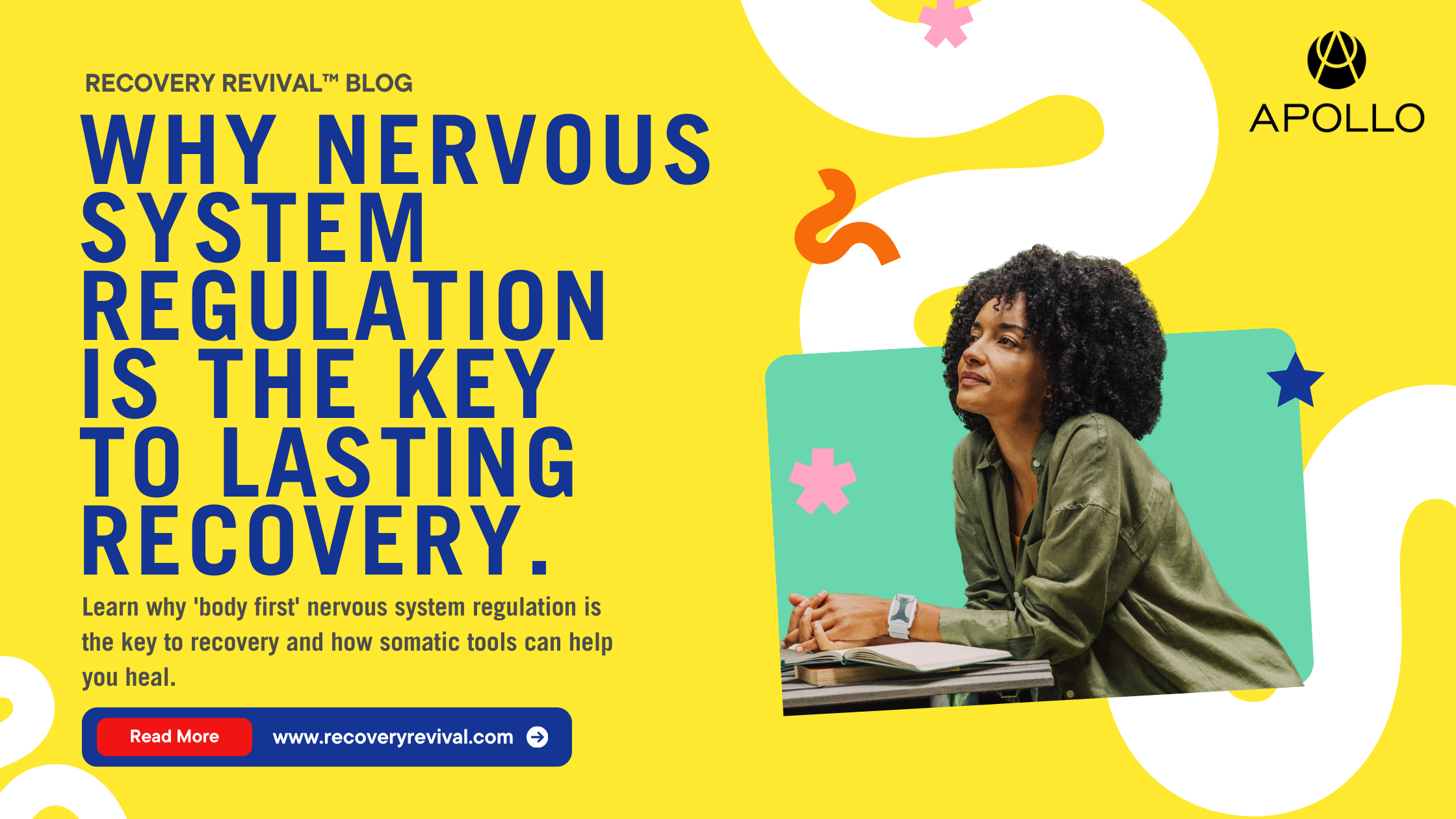
Because our nervous system speaks through feelings and sensations rather than words, the most powerful tools in our recovery are often "body first." We’ve all been told to use "mind first" tools like positive thinking, mantras, or talk therapy. While these are wonderful when we are already feeling calm, they often stop working the moment a real "hijack" begins. This isn't a lack of willpower, it is a biological reality. When your body enters survival mode, the part of your brain that processes logic and language effectively goes quiet. It’s like trying to reason with someone who is screaming, the message just doesn't get through. Body first healing flips this around. It starts with the physical body to influence the brain, trusting that if we can settle the physical storm inside us, our minds will eventually follow.
This approach focuses on sending immediate, undeniable signals of safety directly to the vagus nerve, the main highway of communication between your body and your brain. Since your nervous system is always scanning for "danger" or "safety," we can use physical sensations to act as an anchor in the present moment. Think of this as a manual override for your internal alarm system. By using body first techniques, we aren't just trying to "cope" with a symptom; we are talking directly to the oldest, most protective part of our brain in a language it actually understands.
By focusing on what we feel rather than what we think, we can bypass the logjam of racing thoughts and get straight to the root of the stress. This might look like deep pressure, rhythmic movement, or gentle vibrations that mimic the feeling of true rest. These physical cues act as a "fast track" back to a state of peace, where your heart rate slows, your breath deepens, and your ability to think clearly returns. This is where real recovery happens, not in the exhausting struggle to control every thought, but in the gentle practice of proving to your body, through physical sensation, that the war is over and it is finally safe to exhale.
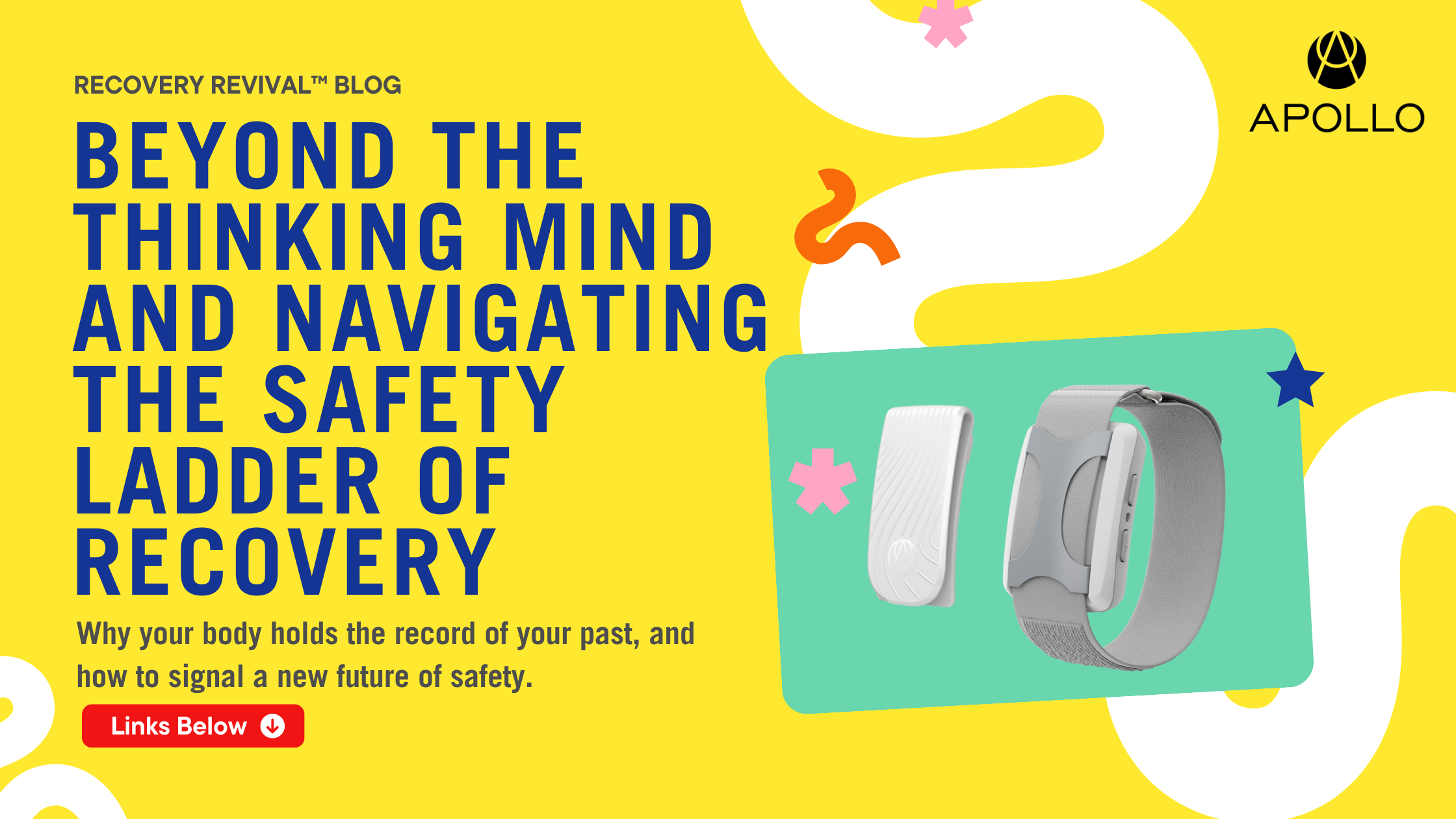
Understanding the need for physical safety is a vital realisation, yet achieving that state in the heat of a trigger is often the greatest challenge in recovery. This is where the intersection of neurobiology and technology becomes a critical asset. Apollo Neuro was developed by neuroscientists and physicians to serve as a tangible, wearable bridge back to a state of safety. Unlike traditional wearables, it is not a passive tracker that simply monitors your distress, it is a proactive, body first intervention that speaks the nervous system’s primary language, sensation.
By utilising scientifically validated vibration patterns, the device delivers gentle waves of touch therapy to the skin. These vibrations are specifically calibrated to mimic the natural rhythms that the human nervous system associates with equilibrium and peace. Because these sensations are processed by the skin. the body’s largest sensory organ they travel directly to the brain’s emotional centers, bypassing the thinking brain entirely. This provides a direct line of communication to the amygdala, signaling that the "threat" has passed and it is safe to downshift from survival mode.
The impact of this technology is backed by rigorous clinical research and real world user experience. In double blind randomised placebo controlled trials and peer reviewed studies, users have experienced significant physiological shifts, including up to 40% less felt stress and anxiety. For those in recovery, where sleep is often the first thing to suffer and the last thing to return, the data is equally compelling, showing an average of 19% more time spent in deep sleep. These aren't just subjective feelings, they represent a fundamental shift in how the body manages its energy and recovers from strain.
Whether it is used to de escalate a midday trigger or to bridge the gap into the restorative rest that recovery requires, Apollo Neuro allows the user to manually "tune" their nervous system. For the person navigating the waves of post acute withdrawal or long term somatic trauma, this tool acts as a consistent signal of safety. Over time, this repeated signaling helps the body unlearn its habitual stress responses and rebuild its natural resilience. It serves as a physical anchor, helping the person in recovery move beyond the struggle of "mind first" willpower and finally feel at home in their own skin.
The journey of recovery is ultimately about reclaiming the space inside your own skin. While the "mind first" work of understanding your story is essential, your nervous system deserves a "body first" partner to help it navigate the daily waves of stress, triggers, and sleep disruption. Apollo Neuro offers a scientifically validated way to signal safety to your brain when your thoughts cannot, allowing you to move out of survival mode and back into the life you are working so hard to build.
To learn more about the science of somatic regulation and how to integrate this technology into your personal recovery toolkit, you can find the full clinical research and product details at the link below and because you're a Recovery Revival™ friend you get an exciting $99 off.




.png)